2026-10-05
The Ones Who Came Before Us
I took this photograph in my studio one morning and realized I was looking at much more than a window. I was looking at my ancestors.
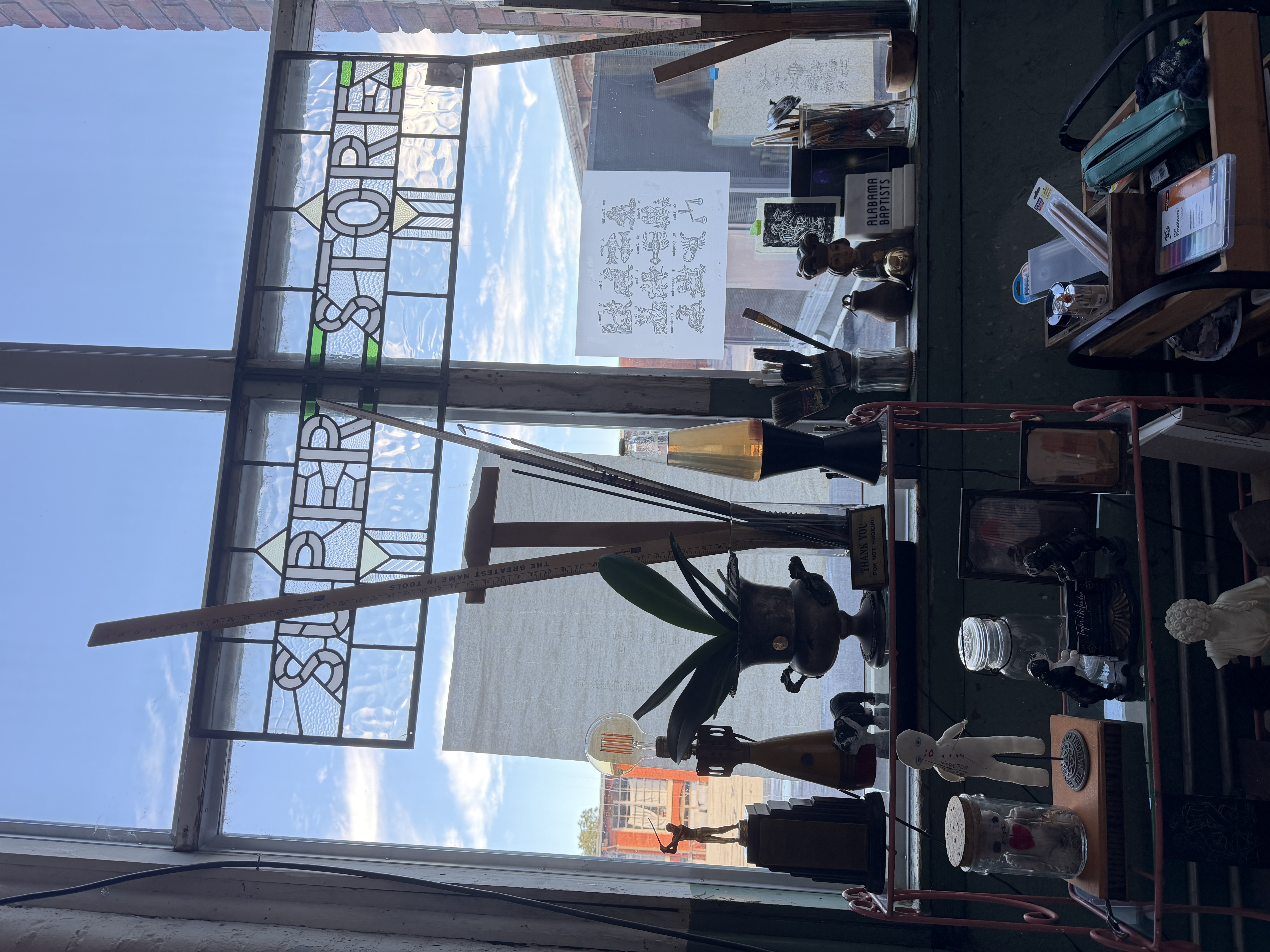
I took this photograph in my studio one morning and realized I was looking at much more than a window. I was looking at my ancestors.
Not their faces necessarily. Not some carefully arranged family tree with names and dates written neatly beneath every branch. I was looking at the evidence of them. Objects that have survived. Things that belonged to people, reminded me of people, or carried pieces of lives lived long before mine reached this particular room.
And standing there in my studio at Lowe Mill in Huntsville, Alabama, it occurred to me again that none of us arrives anywhere alone. I certainly did not.
There were people before me who worked, sacrificed, built houses, buried people they loved, raised children, made mistakes, started over, held families together, left places, returned to places, and carried on when carrying on was probably the last thing they felt like doing. Some of their names I know well. Some exist only in stories that have been handed down. Others have become fragments. But they are here.
I think that is one of the reasons memory has become such an important part of my work as an artist. I am fascinated by what survives us. A photograph. A piece of furniture. A story somebody told enough times that another generation remembers it. A scar on a wall. A name written in an old Bible. An object that would mean absolutely nothing to a stranger and everything to the person who knows where it came from. We inherit much more than possessions.
We inherit ways of speaking. Ways of grieving. Humor. Fear. Faith. Expectations. Traditions. Names. Habits. Strengths. Wounds. Sometimes we spend our lives holding tightly to those things. Sometimes growing requires us to decide which ones we can finally put down. As a Southern artist, that relationship between memory, family history, place, identity, and inheritance appears again and again in my work. I do not think I could separate one from the other if I tried.
My art comes from the same place I do. That window in Studio 255 contains little pieces of a much larger story. Mine is only the newest chapter. There is something both humbling and comforting about that.
We spend so much of our lives thinking about where we are going that we can forget to turn around occasionally and look at the enormous collection of lives behind us. People whose decisions created circumstances they could never have imagined. People who never knew our names, yet helped make our existence possible.
They did not know there would one day be a Taylor McLendon standing in an artist studio inside an old Alabama textile mill, looking through a window surrounded by the remnants of generations that came before him.
But here I am. Because they were here first. And perhaps that is what legacy really is. Not being remembered forever. Not having your name written somewhere important. It is leaving something behind that continues moving through the world after you are gone. Sometimes it is an object. Sometimes it is a story. Sometimes it is a lesson. Sometimes it is simply enough love, stubbornness, sacrifice, or determination to get the next person a little farther down the road.
I look at these things in my studio and see the people who got me here. One day, someone else may look at something I leave behind and see me. That makes me think differently about what we carry. And what we leave.
Taylor McLendon Studio 255 Lowe Mill ARTS & Entertainment Huntsville, Alabama